
In our daily lives, we see that temperature has a direct effect on almost every product we use. Some of the products work well in hot and cold conditions. However, some crack, lose efficiency, or stop working completely when the temperature changes. That’s why manufacturers must know how each product reacts to fluctuating temperatures. That’s where thermal testing solutions come into the scene. But if you are new to this term, it might feel technical. If so, worry not! This guide to thermal testing solutions will make things easier for you. I will discuss common types of thermal testing solutions, how they work, and their benefits. So let’s get started.
What is Thermal Testing & Why Do Products Need Thermal Testing?

Thermal testing is the process of checking how a product performs when it is exposed to different temperatures. During the test, distinct products are kept hot, cold, or under changing temperature conditions. After that, it is checked how that product actually reacts and whether it remains stable or develops issues.
In other words, thermal testing helps manufacturers test the actual efficiency of their products. As you can see, temperatures vary over time and seasons. This temperature variation affects the performance of several products such as lithium-ion batteries. Some products might crack in too-cold temperatures.
However, some devices might become weak or bend in hot temperatures. But by testing the product’s actual strength, manufacturers can build a reliable device. Now they know how it will react to different changing temperatures. So they design and improve the product that way so it works well in real life.
How Does Thermal Testing Work?
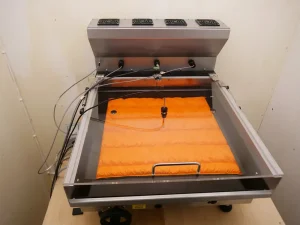
Thermal testing is a very straightforward process that checks the temperature effects on the product. In this test, the sample is placed inside special testing equipment called a thermal testing chamber. This chamber gradually increases the temperature to see how products react. After that, the temperature gradually drops below zero.
Also, the temperature sometimes changes very quickly from low to high or from high to low. Throughout all this, a sensor continuously monitors product temperature and its response. It records all the information, such as changes in temperature, product performance, and any signs of damage. After the test, this information is sent to the controller or displayed on the computer screen.
Now, engineers and experts review the collated data and compare it with the required quality standards. If the product passes the test, it is ready for use under fluctuating temperature conditions. However, if it shows any signs of wear or damage, it is sent to re-manufacturing. Manufacturers improve their designs or materials before they reach the customer.
Main Components of a Thermal Testing System
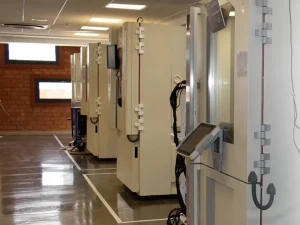
From the outside, a thermal testing system looks like a single unit. But in reality, several components work together to ensure the sample is properly tested. Here is the list of components involved in the testing system.
- Thermal Test Chamber: It is the main enclosed space where a product is placed for testing. This chamber has very controlled temperature conditions. For testing, it can create very high or very low temperatures, or repeated heating and cooling cycles.
- Temperature Sensor: This is the part that monitors the temperature of the chamber and the product being tested. Sensors identify how quickly a product heats up or cools down.
- Data Acquisition System: This system collects all the information produced during testing. It gathers data from temperature sensors and other measuring devices. This data is readable by engineers.
- Control Software: It manages the entire thermal testing process. It allows operators to set the testing temperature, testing time, heating, and cooling rates. Once the test starts, the software automatically controls the equipment as per the selected settings
- Cooling and Heating Units: Lastly, cooling and heating units create the required temperature. The heating unit raises the chamber temperature. At the same time, the cooling unit lowers the temperature.
Common Types of Thermal Testing Solutions
As you know, every product is made for a different purpose. That directly means that they have different temperature conditions. That’s why a single thermal test cannot be enough to test all types of products. Instead, manufacturers use various thermal testing solutions as follows:
1- Temperature Cycling Testing
The first common type of thermal testing is temperature cycling. It checks how a product reacts to both hot and cold temperatures. Here, the chamber first raises the temperature to its maximum. After that, it gradually lowers the temperature to its minimum extent. During this cycle, if the product is made of a weak material, it will start to expand or contract. This process continues for many cycles until the product passes or fails. Now manufacturers assess the product’s actual strength and how it will perform in real life.
2- Thermal Shock Testing
This type of thermal testing checks how a product reacts when the temperature changes suddenly. You see that in temperature cycling, temperature changes gradually. But in this type, the thermal shock chamber suddenly changes temperature from lower to higher or higher to lower. When a product experiences a sudden change, its materials expand or shrink very quickly. A high-quality product will manage these sudden changes and remain in good condition.
3- High Temperature Testing
Now there is high-temperature testing that shows how the product reacts when it is exposed to heat for hours. There is no contribution of cold temperature. Instead, the testing chamber gradually increases the temperature to a specific level, and the product is placed inside it. If the product shows any sign of melting, it means the material inside is not strong. This testing solution is very handy for testing lithium batteries that are sensitive to heat.
4- Low Temperature Testing
It is totally the opposite of a high-temperature testing solution. It checks the cold resistance of a product. The chamber here creates a low temperature to a specific level or minus point. The product is kept in this chamber for a long period. Actually, some materials shrink, become brittle, and develop cracks at very cold temperatures. This testing solution assesses the reliability of various products at very low temperatures.
5- Thermal Aging Testing
Another special thermal solution is aging testing, which shows how a product reacts when it is kept at a high temperature for an extended period. You might confuse it with high-temperature testing. But remember, during high-temperature testing, products remain in the chamber for only a few hours. However, in thermal aging testing, the product is kept for weeks.
It means manufacturers want to see how the product will perform as it gets older. Over time, constant heat starts to affect materials such as plastic or rubber inside the product. If that plastic is not strong enough, it will start becoming brittle. If there is rubber, it will start losing its flexibility. As a result, manufacturers can change these materials to better ones.
6- Thermal Conductivity Testing
Lastly, it comes to thermal conductivity testing, which identifies how easily heat passes through a material. It shows whether a material transfers heat quickly or slows it down. During the test, heat is applied to one side of the material. As the heat starts flowing, a special sensor on the other side measures how quickly or slowly it moves. This information is useful for making products that need to efficiently retain, block, or release heat.
Benefits of Thermal Testing Solutions
Thermal testing solutions are more than just showing a product’s reaction to heat or cold. These tests reveal the true strengths and weaknesses of the material. When manufacturers know this, they can choose the right material for making a reliable product before it reaches the market. But that’s not all. Let’s discuss more about what actually makes thermal testing solutions beneficial.
- Improves Product Quality: The major benefit of thermal testing is better product quality. When it is exposed to different temperatures, manufacturers can determine its true strength. If any material becomes weak or changes shape, it can be improved.
- Detects Weaknesses Early: Secondly, the thermal testing helps reveal hidden weaknesses. For example, if there are any weak joints or poor-quality materials, manufacturers detect them at that stage. Now they don’t send such weak products to market; they improve their quality first.
- Reduces Product Failures: Untested products are more likely to fail after they are sold. Why? Because the manufacturers don’t know how they react to heat or cold. But thermal testing lowers this risk by testing the actual strength of materials. It ensures products will withstand fluctuating conditions.
- Saves Manufacturing Costs: If any problem arises in the product after production, it can be costly. How? Actually, the customer might return it. After that, the manufacturer has to replace, repair, or re-manufacture that product from the start. But thermal testing helps to identify any problems at the development stages. At this stage, fixing the issue is very easy and not costly.
- Supports Industry Standards: Many industries have quality and safety standards. The distinct product must meet those standards. So that’s the thermal testing that helps manufacturers check if their products can meet these requirements.
- Builds Customer Trust: Customers expect products to work safely and reliably. Now, when the product is thermally tested, it will not fail during normal use. This enhances the brand’s reputation and builds customer trust.
Factors to Consider When Choosing Thermal Testing Solutions
As you can see, there are a variety of thermal testing solutions. All of them vary in many aspects. That means not every solution can meet your needs. You have to choose the one that matches your product’s purpose and requirements. To make this decision easier for you, here are some factors you must consider.
- Temperature Range: First, know the thermal testing system’s temperature range. Some testers provide moderate temperatures. However, some testers create very high or very low temperatures. So, you must make sure that the thermal solution you choose is able to maintain the temperature your product needs.
- Testing Accuracy: Secondly, check the solution’s testing accuracy. Make sure the temperature inside the test chamber stays as close as possible to the set temperature. This high accuracy will give you trustworthy results.
- Chamber Size: Thermal testing chambers are available in various sizes. So always make sure the size is compatible with your product. It should be large enough to fit the product comfortably without blocking airflow.
- Automation Features: When choosing the thermal testing solution, prioritize its automation features. This will help the system perform many testing tasks automatically. There is no need for constant manual control. You have to set the required temperature and testing time. This automation saves your time and makes the tests more reliable.
- Maintenance and Support: Lastly, check how easy the equipment is to maintain. You should choose the testing solution that is easy to clean and inspect. Also, choose a supplier that offers technical support, spare parts, and training. If any issues arise, this support will minimize downtime and keep your testing work running.
Conclusion
Every product in real life responds differently to changing temperatures. Some might shrink, show brittleness, or bend or expand. That’s why it is very important to understand the behavior of every product to reduce failures. For this, thermal testing solutions come into play. These solutions use a special testing chamber that creates different temperature conditions.
It helps to check how materials or products react to hot or cold temperatures. But not all these solutions are the same; they come in different types. Some only check the cold effect; some check both the hot and cold effects. The right one among those is the one that matches your product requirements. So always consider the chamber size, testing accuracy, and temperature range before making a final decision.