
Have you ever noticed tiny fuzzy balls on your sweater, t-shirt, or blanket? At first, you might think that it is dust or lint. But in reality, that is an actual fabric problem known as pilling. These pills appear on almost every type of fabric, whether it is a natural fiber, a synthetic fiber, or a blend of both. This pilling might not look good at first. But eventually, it can ruin the overall look of your fabric. That’s why it is crucial to recognize it at the first stage so you can avoid it or remove it. But if you don’t know anything before about these fabric pills, you might wonder: How to recognize pilling of fabrics? Worry not! In this guide, I will discuss the entire process of identifying pills, how to avoid them, and how to remove them. So let’s get started.
What is Pilling of Fabrics and Why Does Fabric Pilling Occur?

Fabric pilling is the process of the formation of small fuzzy balls on the surface of a fabric. These tiny balls are basically made of loose fibers of the fabric itself. Over time, they become tangled together and make the entire cloth look dull and old.
Pilling is not confined to just one fabric type or its quality. Instead, you will see it on clothes, blankets, furniture fabrics, and many other textile products. However, these pills do not actually damage the fabric surface. But they make the entire fabric look dull and worn out. If we discuss the reason, the biggest one is rubbing.
Every time a fabric rubs against your skin, another piece of clothing, some fibers on its surface become loose. These loose fibers do not immediately fall off. Instead, they stay attached to the fabric and gather on the surface. Over time, these loose fibers start to twist and tangle with each other. As a result of this, there become tiny balls known as pills.
Secondly, the type of distinct fiber in the fabric can also cause pilling. Actually, some fabrics, such as polyester, contain shorter fibers that easily come out of the yarn. These fibers are very strong, so they don’t break; they remain in place to form balls. Washing, further rubbing, and everyday wear speed up the pilling.
Fabrics That Are More Likely to Pill
As I mentioned above, fabric pilling is not limited to a single type of fabric. There is a range of fabrics that are more prone to pilling due to their loose fiber nature. Here is the list of some of those fabrics where pills appear more frequently.
- Polyester: Polyester is known for its strength. But even when the fiber becomes loose, it remains attached to the surface and forms pills.
- Acrylic: Acrylic is a soft and lightweight synthetic fabric. It is often used as a substitute for wool. During regular use of acrylic, the fiber becomes loose and forms pills.
- Wool: It is a natural fiber that provides excellent warmth and comfort. But during everyday use, some fibers work their way out of the yarn. So they move to the surface and form pills.
- Cotton Blends: Cotton on its own is generally less likely to pill. But if it’s blended with other fabric, it can develop pills.
- Fleece: Fleece is loved for its soft and fuzzy texture. It already has raised fibers on its surface that tangle and create pills.
- Knit Fabrics: Knit fabrics are made by looping yarns together. This structure allows fibers to move more freely, increasing the risk of pilling.
How To Recognize Pilling Of Fabrics?
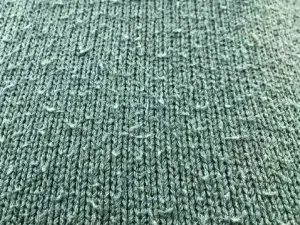
Now you know what fabric pilling is and why it occurs. Right? Next, it’s about recognizing it so you can remove and save your fabric in the future. Here are some ways to easily identify fabric pilling.
1- Place the Fabric Under Good Lighting
The first method you can try is to place the fabric with pills in a well-lit area. Generally, natural light is best for revealing the pills. But if you don’t have enough natural light, use high-power bulbs. Now spread the fabric on a flat surface, just under the light, so you can easily see all the areas. But take your time to look at the fabric from different angles. Sometimes pilling is easier to notice when light falls directly on the surface or from a different side.
2- Look for Small Fuzzy Balls on the Surface
Secondly, carefully check the fabric for tiny balls of tangled fibers. These fibers are most probably signs of pills. But remember, these fibers can sometimes match the fabric’s color, making them difficult to identify. So when direct light hits the fabric at different angles, it becomes more visible. However, sometimes, they can also be in different colors depending on the fabric’s nature. The fabric that has just started to pill will show smooth balls.
3- Check High-Friction Areas First
Instead of examining the entire fabric, the best and easiest way is to first look at a high-friction area. These are the areas that remain in constant contact with your body or with external factors. So there are more chances that they develop pills. For example, if you are checking the sweater, first look at its underarms, cuffs, elbows, and collar. On pants, pay close attention to the inner thigh area and the seat. You will quickly see balls here, which will save you time.
4- Feel the Fabric With Your Hand
You have visually examined the fabric, but that’s not enough. The next method is to feel those areas with your hand. Actually, when the pilling balls are in earlier stages, they are difficult to inspect visually. That’s why it is necessary to feel it with your hands. Slowly run your fingers across the fabric surface, especially the high-friction areas, and pay heed to how it feels. A fabric that is in good condition usually feels smooth, soft, and even. However, if pilling is present, you will clearly notice small bumps, rough spots, or an uneven texture. These are what we actually call the pills.
5- Compare Worn Areas With Less-Used Areas
The final method to help you recognize the pills is to compare often-used parts of the fabric with less-used ones. Why? By comparing, you will see clear differences that help you recognize pilling. First, choose a section that is regularly exposed to friction.
For example, if that is a sweater, you have to compare the underarm area with a section near the side seam. Both of these sections are no doubt made of the same fabric. But you will notice that less-used areas, such as the side seam, are smooth with almost no fiber balls. But at the same time, when you touch the worn area, you will feel small bumps, a clear sign of pilling.
How to Remove Fabric Pills: Some Useful Methods
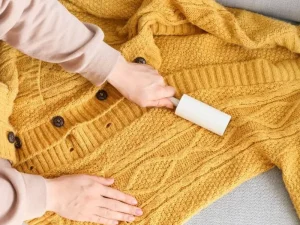
There is no doubt that the pilling makes the fabric look dull over time. However, it is not impossible to remove those pills. There are a few methods that can help you easily cut off or lift the pills without damaging your fabric.
1- Fabric Shaver
A fabric shaver is one of the most effective and user-friendly tools for removing pills. It is a small electric device that contains small blades inside. When you move it slowly over the fabric, it quickly pulls the pills into its blades. As it is an electric device, you can quickly clear a large area. However, when using it, be very careful, as excessive pressure can damage or cut the fabric.
2- Sweater Stone
A sweater stone is a natural tool made from a soft, rough stone. It is specifically designed to remove pills from knitted or thick wool fabrics, such as sweaters. When you use a sweater stone, you lightly rub it over the fabric in one direction. As it moves across the surface, it catches the small fuzzy balls (pills) and pulls them away. However, this sweater stone does not penetrate deeply into the fabric; it just removes raised fibers and cleans the fabric. Also, it takes more time to remove the pills. But the result is satisfying as it doesn’t damage the fabric at all.
3- Lint Comb
Now there is a lint comb, a small hand tool you can use to remove pills from different fabrics. It usually has fine, closely spaced teeth. Those teeth are strong and sharp enough to catch and remove the loose fibers. You simply need to drag it across the fabric surface. As it moves, the teeth grab the small fuzzy balls and pull them away from the material. But remember, unlike electric tools, it just removes the pills from the outside. Also, it takes longer to clean the overall pill.
4- Razor Method
The razor method is another simple way to remove fabric pills using an ordinary clean razor. To apply this method, you first have to place the fabric on a flat surface. After that, use a hand or electric razor and gently move it over the fabric in short, soft strokes. As it moves, its sharp blades will quickly draw and remove the pills. In this way, you can quickly clean a large area. However, remember that this blade is often very sharp. So there’s a greater chance you’ll cut the fabric itself if you’re not careful. Also, this method only works for tightly woven fabric. So, for loose, soft fabric, I don’t recommend using a razor.
5- Pumice Stone
Pumice stone is a naturally rough, abrasive stone often used for skin cleaning. But at the same time, you can use it to remove fabric pills. How? Actually, it has a rough, abrasive surface. When you move it on the fabric surface, it removes pills more aggressively. That’s why, unlike a sweater stone, you can use the pumice stone on almost every type of fabric. Generally, you have to move it by hand, which takes time. But for beginners, it is a more controlled and safer way to remove pills from fabric.
Frequently Asked Questions
How Manufacturers Test Fabric Pilling
Generally, manufacturers use specialized abrasion testing machines that apply friction to the fabric. This testing equipment rubs the fabric in a controlled way to simulate real-life use. After this abrasion test, they check how many pills have formed to check fabric quality.
Does Pilling Mean Poor Fabric Quality?
No! It is not always true. Pilling often happens even in high-quality fabrics because it is mainly caused by friction and fiber movement. However, if the fabric is low-quality, pilling occurs faster.
When Should You Be Concerned About Pilling?
In normal cases, fabric pilling is common. However, you should be concerned if pilling appears very quickly after little use. It is also a warning sign if the fabric starts to look thin or worn, or if it pills.
Conclusion
Pilling on fabric is the most common problem, affecting almost every type of fabric. Even if your clothes are new, these pills can make them look old and rough. The main reason for this issue is friction, which causes small bumps on the fabric surface. However, the key to handling pilling is awareness. When you know how to recognize it early, you can take better care of your clothes before the problem becomes worse. That’s why, to help you out, I have discussed some of the best ways to identify pills in this guide. Once you know these, it becomes easier to remove the pilling using simple methods. For example, you can use a razor, pumice stone, or shaver.